
(AsiaGameHub) – By: Lucas Caldwell
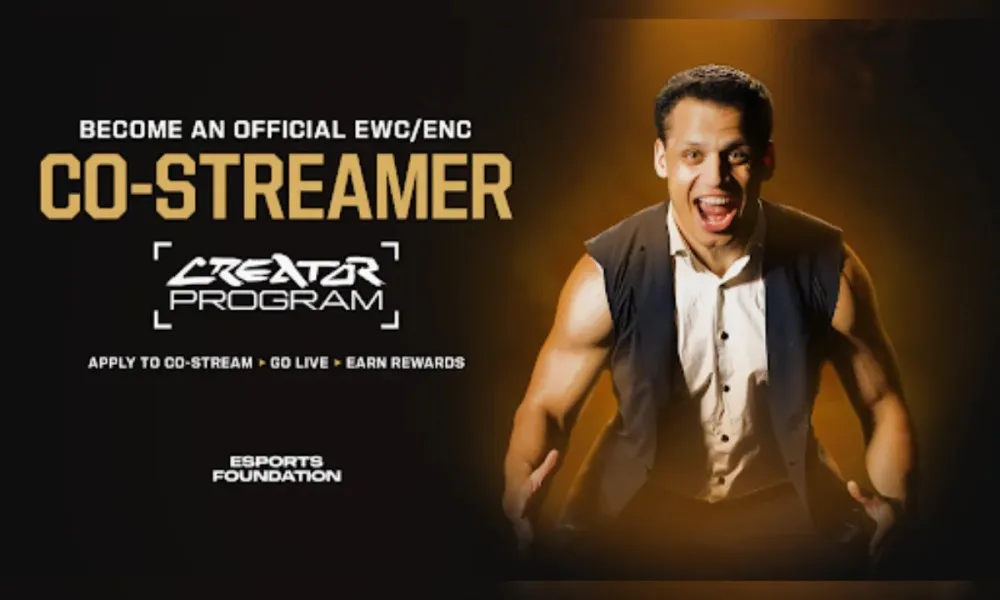
This isn’t just another creator fund for a big esports tournament. Most big event organizers still treat co-streamers like a side hobby. They toss small perks and call it community outreach. The Esports Foundation just dropped a $2 million reward pool, and it’s a full-on attack on how big live events operate. I chatted with three mid-tier streamers last week, all said they’d apply in a heartbeat if accepted.
EF announced the program on June 12, 2026 from Paris and Riyadh. Applications are open right now, and creators based in India are eligible. The program supports two 2026 events: the Esports World Cup in Paris and the Esports Nations Cup in Riyadh. In 2025, 3,500 co-streamers were one of the key growth pillars for EWC viewership. This year’s scaled-up program targets 5,000 creators across new regions and platforms.
Approved creators can co-stream selected tournaments and complete missions. They progress a battle pass that unlocks a range of rewards. Rewards go from gift cards and hardware to event invites and platform perks. The program supports multiple major platforms, including Twitch, YouTube, Bilibili, Huya, and CHZZK. EWC 2026 runs July 6 to August 23 at Paris Expo, with 2,000 players and a $75 million+ prize pool. ENC 2026 comes to Riyadh this November, extending the program.
EF’s broadcast director put it better than I can. This isn’t just an esports trend, it’s a broader media shift. Audiences no longer accept whatever broadcast feed organizers hand them. They want to watch via creators they already know and trust. Fans pick where to focus, what tone to watch, and how deep to dive into the action. Traditional pro sports are heading this same way, but they move far slower than esports.
The $2 million pool does more than pay creators for their time. It locks in creator-led promotion that reaches hyper-niche fan communities. It bypasses the rigid gatekeeping of official exclusive broadcast deals. It gives small and mid-tier creators a real shot at tangible rewards, not just exposure. It aligns the incentives of event organizers, creators, and fans all at once. The only group that loses out here is the old broadcast guard that hoards distribution rights.
This model will replace exclusive broadcast rights for most major live events within five years.
Author bio: Lucas Caldwell, a tech opinion leader covering gaming and streaming with millions of followers on X/Twitter.